
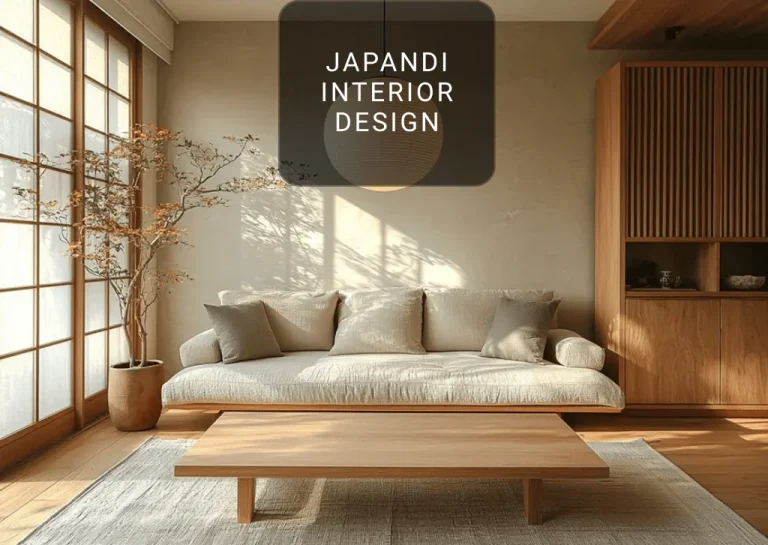
Japandi interior design combines Japanese simplicity with Scandinavian design, creating homes that feel calm, practical, and comfortable rather than empty.
For Dubai homeowners, the appeal is practical: open layouts, daylight, modern architecture, and the need to hide everyday clutter all suit this approach. The best results come from adapting the style to Dubai’s climate and lifestyle; the same logic works across a Japandi house interior.
What is Japandi Interior Design?
Japandi blends Japanese simplicity with Scandinavian comfort, functionality, and craftsmanship. It favours fewer, better choices, purposeful storage, calm colours, and useful furniture. Wabi-sabi can influence details such as handmade ceramics, visible grain, asymmetry, and natural variation.
Why Japandi Suits Dubai Homes
Japandi interior design fits Dubai homes because open layouts, daylight, and modern architecture already support its uncluttered approach. Timber, stone, soft textiles, plants, and layered lighting add depth. Hidden storage keeps the calm appearance practical for daily use and makes Japandi home decor easier to maintain.
The Desert Palette: Where Arabian Warmth Meets Japandi Restraint
A Dubai-friendly palette can combine bone, oat, sand, clay, muted terracotta, warm stone, and olive. Regional warmth should come through colour and material rather than heavy ornament. Cool grey-white schemes can be softened with warmer neutrals.
Japandi and Bali-Inspired Interiors: Dubai’s Favorite Hybrid
A Bali-inspired layer works well when you want greenery, rattan, cane, stone, and indoor-outdoor character, especially in villas with terraces or garden views. Keep these elements selective so the room still follows the calm logic of a Japandi-style interior design. Rattan, clay planters, timber, linen curtains, and large plants can add warmth without clutter.
Core Materials and Principles of Japandi Design
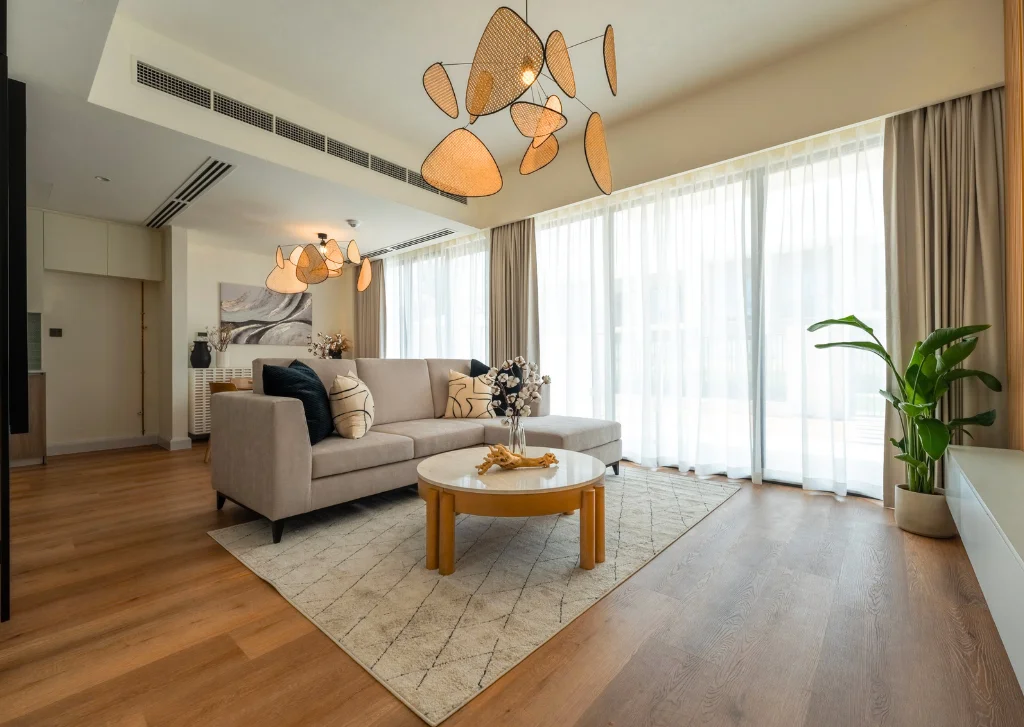
Japandi interior design works best when every visible element supports the same quiet visual language, from the wall finish to the storage hardware.
The Japandi Color Palette
Use warm white, cream, beige, oat, sand, taupe, timber, and simple olive or charcoal. Keep one main base and only a few supporting tones. Let wood and stone provide natural variation while Japandi home decor stays consistent.
Natural Materials: Wood, Stone, Limewash, and Textiles
Oak, ash, walnut, stone, ceramic, limewash, linen, cotton, and wool can supply most of the visual interest. Limewash adds mineral variation and textiles bring softness. In wet or high-use areas, performance must guide the specification.
Furniture Style and Silhouette
Choose low-profile furniture with clean lines, rounded edges, and limited ornament. Low sofas, timber tables, platform beds, floating consoles, and streamlined built-ins preserve visual space. A good Japandi interior designer plans hidden storage before decoration begins.
Layered Lighting for a Calm Interior
Combine daylight with ambient, task, and accent lighting rather than one bright ceiling fixture. Warm light around 2700K, dimming, and indirect sources suit the mood. High colour rendering helps timber, stone, and fabrics look natural.
Japandi vs Wabi-Sabi: What’s the Difference?
Japandi is the overall interior style, while wabi-sabi is a Japanese aesthetic idea focused on simplicity, imperfection, natural variation, and the passage of time.
A Japandi room can include wabi-sabi influences without becoming a pure wabi-sabi interior; a hand-thrown vase or naturally irregular timber can add character while the home stays functional.
Wabi-sabi does not mean buying damaged or poor-quality products. It means appreciating authentic material character and natural variation. Japandi then combines that simplicity with Scandinavian comfort, efficient storage, soft textiles, and furniture designed for daily use.
10 Japandi Design Ideas for Dubai Villas and Apartments
- Use a low sofa, warm timber, linen, and concealed storage for a calm living zone
- Build a Dubai desert palette with sand, oat, clay, terracotta, and muted olive
- Add one or two statement plants rather than filling the room with greenery
- Choose rounded, stain-resistant seating for families
- Use full-height storage and multifunctional furniture
- Mix contemporary architecture with warm wood and soft furniture fabric
- Add selective rattan, cane, and stone for a Bali-inspired variation
- Let limewash, wool, boucle, ceramics, and timber provide texture instead of clutter
- Keep kitchen cabinetry simple, storage-rich, and visually consistent
- Use paper-inspired pendants and warm indirect light
Does Japandi Design Work in Dubai’s Climate?
Yes, but Japandi should be adapted to Dubai rather than copied unchanged from cooler climates. Dubai’s summer temperatures are high, and local guidance stresses thermal comfort and HVAC performance, so daylight control and practical materials matter.
Use light plus blackout curtains where needed, prefer warm neutral colours, select easy-clean finishes for high-touch zones, and avoid large unengineered timber panels without checking their suitability.
A climate-smart Japandi home should control glare rather than rely on shiny surfaces. Keep circulation open, use layered warm lighting at night, and consider low-emitting paints, coatings, adhesives, and sealants. The result is visually calmer, not literally cooler.
Japandi Interior Design, Room by Room
Japandi Living Room Ideas
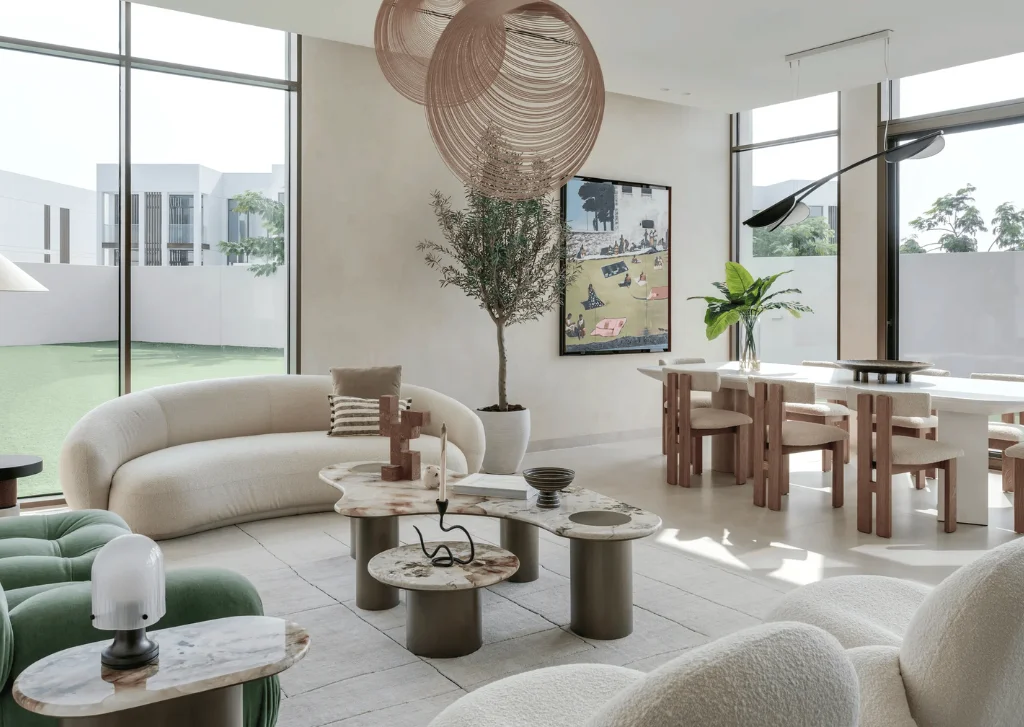
Start with one well-scaled seating arrangement instead of several small furniture pieces. A low sofa, natural-wood table, textured rug, soft curtains, plants, and concealed media storage create warmth while keeping circulation clear; in a large villa, one large piece can anchor the room better than many small items. A good Japandi-style living room relies on texture and proportion, not decoration.
Creating a Calm Japandi Bedroom
A quiet bedroom needs a low or visually light bed, warm timber, natural bedding, soft neutrals, minimal bedside furniture, and gentle layered lighting. Linen or cotton bedding and wool or woven textures add comfort without visual noise, while built-in wardrobes keep clothing hidden. A calm Japandi-style bedroom should feel restful first and decorative second.
Japandi Kitchen Design
A kitchen begins with the homeowner’s cooking habits, then uses simple cabinetry, efficient storage, durable worktops, and a simple palette. Timber fronts, stone or quartz, gentle ceramics, integrated appliances, and limited open shelving can work well. The strongest Japandi design idea for a kitchen is the one that makes everyday work easier.
Japandi Bathroom Essentials
Use simple sanitaryware, warm stone, protected timber details, soft neutral colours, minimal hardware, and calm lighting to create a spa-like space. Continuous-looking surfaces can reduce noise, but waterproofing, drainage, ventilation, and surface preparation must come before appearance. Keep Japandi decor simple; use Japandi style decor only where it adds function, texture, or meaning.
Japandi vs Scandinavian vs Minimalist: Which Fits Your Home?
Choose Japandi when you want minimalism without coldness. Scandinavian design suits homes where brightness and comfort lead, while pure minimalism suits people who want maximum visual reduction. Your family needs, storage requirements, room size, and tolerance for maintenance should make the final decision.
How Much Does Japandi Interior Design Cost in Dubai?
There is no fixed Japandi price in Dubai because the final cost depends on property size, existing condition, joinery, finishes, lighting, kitchens, bathrooms, furniture, and fit-out scope. The average cost range is AED 75 – 200 per sq ft for budget-to-mid-range, AED 200 – 400 for mid-to-premium, and AED 400 – 600+ for premium work, with ultra-luxury projects potentially reaching AED 1,000+ per sq ft.
Japandi can cost more than it looks because clean walls, built-in storage, custom joinery, proper lighting, and good material matching leave little room to hide poor workmanship; always compare quotations by included scope, not price alone.
How to Choose an Interior Designer for a Japandi Project
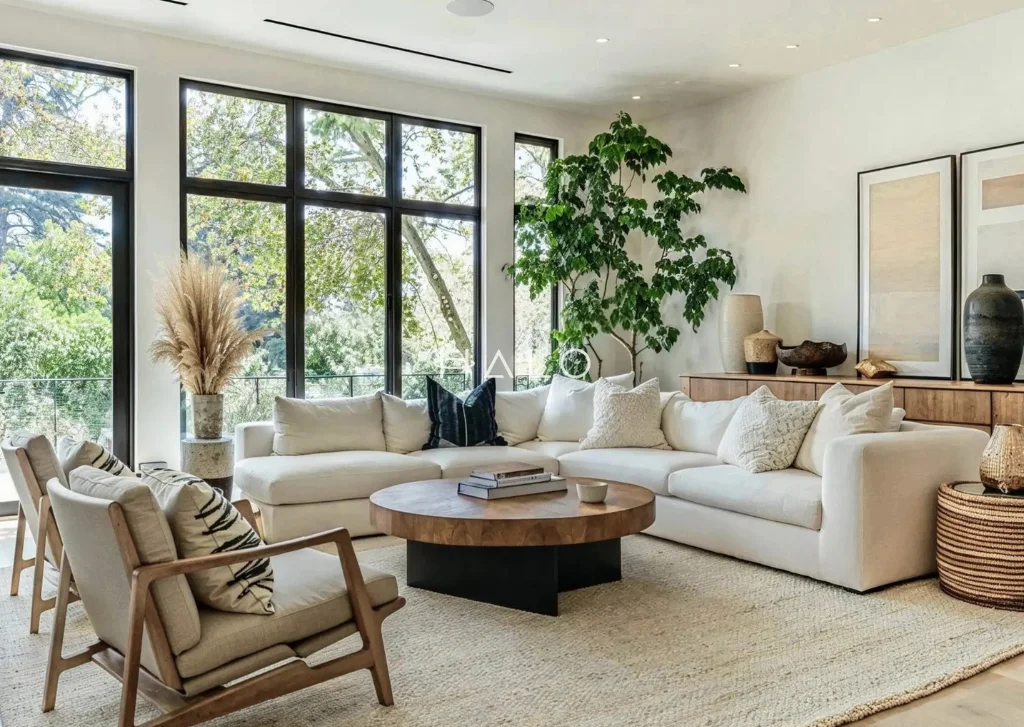
Japandi interior design needs strong coordination from concept to site execution. Atech Interiors LLC is a strong choice for Japandi interior design services in Dubai because its design-and-fit-out approach can keep the concept, materials, joinery, and execution aligned. That matters because inconsistencies in timber, lighting, reveals, or storage quickly become visible.
Questions to Ask Before You Sign
Ask whether design, drawings, joinery, furniture, lighting, procurement, supervision, approvals, final inspection, and handover are included. Also ask how variations and material substitutions are priced and whether the timeline includes procurement.
Red Flags to Watch For
Be cautious of low quotes with unclear inclusions, render-only portfolios, vague joinery allowances, no site survey, or unclear approval responsibility. Another warning sign is reducing Japandi to beige furniture and plants instead of planning storage, materials, lighting, and execution.
Common Mistakes to Avoid in Japandi Design
- Using too much cool grey and losing the desired warmth
- Mixing unrelated timber colours across flooring, doors, and furniture
- Filling shelves and surfaces until the negative space disappears
- Buying furniture before planning hidden storage
- Confusing warm minimalism with an empty room
- Relying on one harsh ceiling light instead of layered lighting
- Choosing natural finishes without checking moisture, cleaning, and durability needs
- Copying a cooler-climate palette without adapting it to Dubai
- Adding too many black accents and pushing the room toward an industrial look
- Spending on decor while under-budgeting joinery, surface preparation, lighting, and installation
FAQs – Frequently Asked Questions
1. Is Japandi still trending in 2026?
Yes; Japandi interior design remains relevant in 2026 because homeowners want minimal spaces that still feel warm, natural, comfortable, and practical.
2. Does a Japandi interior increase resale or rental value in Dubai?
It can improve presentation and appeal, but Japandi alone does not guarantee higher value; location, layout, condition, quality, and execution matter more.
3. Can Japandi work in a small apartment?
Yes; low furniture, consistent colours, multifunctional pieces, and concealed storage can make compact rooms feel more spacious.
4. Is Japandi too minimal for a family home?
No; rounded furniture, performance fabrics, durable materials, and hidden storage can make it practical for family life.
5. Do you need a designer for Japandi, or can you DIY it?
You can DIY decor, but a designer adds value when custom joinery, lighting, kitchens, bathrooms, approvals, or detailed fit-out work are involved.